Canary Islanders show strong commitment to the green transition and want an active role in shaping it

    • 60.9% of Canary Islanders consider tackling climate change a priority, above the national average
    • Two in three believe the green transition will help create cleaner environments and improve public health
    • Read the full report here
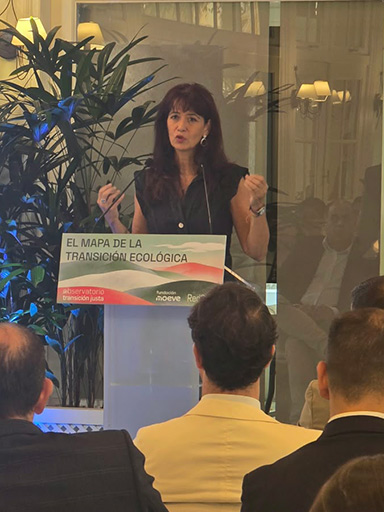
People in the Canary Islands show a stronger commitment to the green transition than the Spanish population as a whole and want an active role in shaping it. These are among the findings of the 2026 Report on public perceptions of the green transition in the Canary Islands, produced by the Just Transition Observatory, an initiative led by fundación Moeve in collaboration with Red2Red. The findings were presented today in Santa Cruz de Tenerife at an event exploring the challenges and opportunities the green transition presents for the islands. 

The study shows that Canary Islanders feel the effects of climate change particularly acutely, give higher priority to climate action, and want a say in the decisions that will shape the future of the green transition. 

The event brought together representatives from government, business, academia, and civil society to discuss how to achieve a fair green transition that meets the specific needs of the Canary Islands. Teresa Mañueco, Director of fundación Moeve, was joined by Mariano H. Zapata, the Canary Islands Government’s Minister for Ecological Transition and Energy; Blanca Pérez, Tenerife Island Council’s Councilor for the Natural Environment, Sustainability, Safety, and Emergencies; and Adal García, CEO of Sinpromi. 

Anabel Suso of Red2Red, Coordinator of the Just Transition Observatory, gave a detailed presentation of the report. This was followed by a panel discussion featuring Marta Domínguez, Vice-Rector for Sustainability and Infrastructure at the University of La Laguna; Alejandro Molowny, Director of Waste Management at Tenerife Island Council; and Jesús Matilla, President of the Canary Islands Renewable Energy Association. 

The Canary Islands: a strong commitment to the green transition 

The Observatory’s findings show that people in the Canary Islands have a high level of environmental awareness and commitment. Some 60.9% believe that tackling climate change should be a priority, above the national average. In addition, 61% believe that citizens should be involved in decision-making alongside the relevant public authorities—eight percentage points higher than the figure for Spain as a whole. 

People in the Canary Islands also feel more directly exposed to the effects of climate change. Half of those surveyed believe that extreme weather events affect or could affect their health, while a large majority recognize potential impacts on mobility, natural resources, and the islands’ economy. 

Despite these concerns, people in the Canary Islands remain optimistic about the opportunities the green transition can bring. A majority believe it can help create jobs, drive innovation, improve quality of life, and strengthen social cohesion, with several indicators above the national average.
"The Canary Islands stand out for their commitment to tackling climate change and their belief that this process can bring social and economic benefits to the islands. At fundación Moeve, we support the Just Transition Observatory to build knowledge and encourage constructive dialogue that helps shape strategies to accelerate a green transition that is fair, participatory, and tailored to the islands’ needs."

Teresa Mañueco - director of fundación Moeve

Blanca Pérez, Councilor for the Natural Environment, Sustainability, Safety, and Emergencies at the Tenerife Island Council, stressed the importance of understanding public perceptions of this process: “The findings show that people in the Canary Islands are aware of the effects of climate change and want to play an active role in the green transition. Studies like the one presented today are essential because they help public institutions and businesses better understand people’s needs and expectations, guide decision-making, and support progress toward a transition that reflects the realities of people’s lives.” 

Bringing the green transition closer to people

During his address, Mariano H. Zapata, Minister for Ecological Transition and Energy in the Canary Islands Government, emphasized that “the energy transition in the Canary Islands requires practical tools that make it easier for households to adopt new solutions. Measures such as supporting households in generating their own electricity and introducing the Appliance Replacement Plan aim to help people play a direct role in improving energy efficiency.” 

He also stressed that “the success of this transformation depends on our ability to help people understand it, take part in it, and make it their own. The green transition is about more than changing how we produce energy. It is about moving toward a cleaner model that becomes part of our everyday decisions and habits.” 

A discussion of the challenges facing the green transition in the Canary Islands 

During the panel discussion, participants explored some of the main challenges facing the green transition in the Canary Islands. These included the development of renewable energy, which remains well short of the targets set out in Spain’s National Energy and Climate Plan (PNIEC) and is partly influenced by public perceptions of certain projects, and the role of universities in advancing knowledge and research to help overcome existing barriers. The discussion also addressed waste management as a strategic challenge for the islands, highlighting the potential of the recycling industry and the circular economy to generate economic activity, make better use of resources, and strengthen the archipelago’s energy independence while helping combat climate change. 

Updates to the methodology

The Just Transition Observatory (OTJ) is an initiative launched by fundación Moeve and Red2Red to examine public perceptions of the green transition in Spain. For this edition of the OTJ study, 3,284 people across the country were surveyed by telephone and online between January and February 2026, including a representative sample of 401 respondents in the Canary Islands. 

Alongside an analysis of trends since 2025, this year’s report includes a new section exploring perceptions of climate risks, vulnerability in everyday life, and the preventive measures households have taken to adapt.

  1. Home
  2. News